



The Role of Innovation in Inclusive Healthcare
Healthcare is constantly evolving. New technologies, digital tools and assistive devices are changing how care is delivered and how people manage their health and daily lives.
But innovation in healthcare is not automatically inclusive.
For people with disabilities, the real value of innovation lies in whether it removes barriers, supports independence and makes participation possible. From accessible digital health services to advanced assistive technology, innovation can help create healthcare that works for a wider range of people.
What does inclusive healthcare mean?
Inclusive healthcare means that people can access and benefit from healthcare regardless of their abilities or circumstances.
For people with disabilities, this can involve much more than physical access to a healthcare building. Communication, digital accessibility, equipment, information, healthcare processes and the way services are delivered can all create barriers.
The World Health Organization (WHO) estimates that around 1.3 billion people worldwide live with a significant disability. At the same time, people with disabilities continue to experience health inequalities, including barriers to accessing appropriate healthcare.
Inclusive healthcare therefore means asking a broader question:
Does this innovation work for everyone who needs it?
Innovation can remove barriers to independence
One of the clearest examples is assistive technology.
Wheelchairs, communication devices, prostheses, hearing aids and other assistive products can help people maintain or improve their functioning and independence. According to WHO, assistive technology can support participation in education, employment and community life.
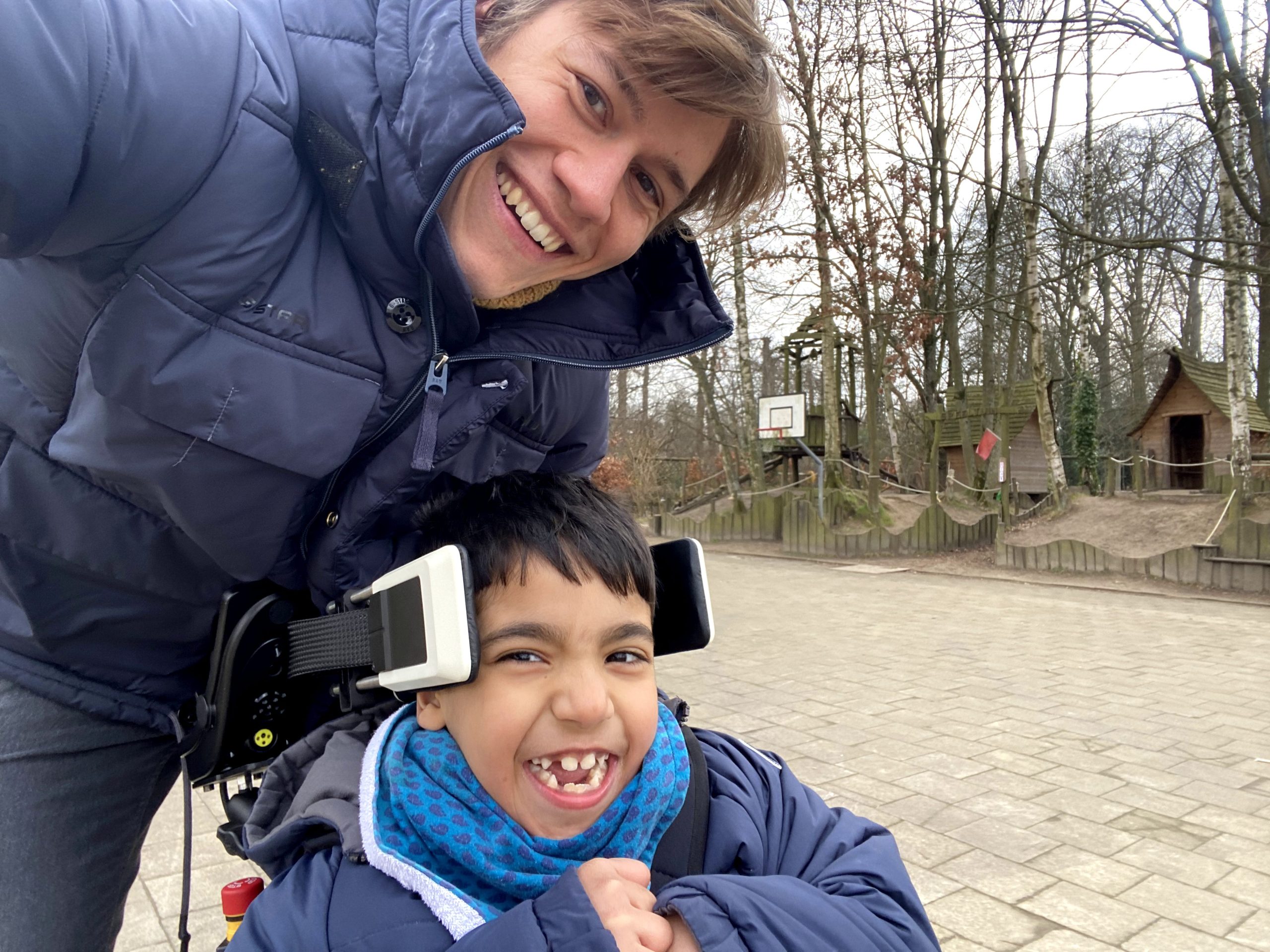
For someone with a significant physical disability, the right technology can change what is possible in everyday life. A powered wheelchair, for example, can provide independent mobility. But innovation does not stop at the wheelchair itself. The way a person controls that wheelchair can also determine how independently they can use it.
If a conventional joystick is not suitable because of limited arm or hand function, alternative control methods may provide another route to independent mobility.
This illustrates an important principle:
Inclusive innovation adapts technology to people, rather than expecting people to adapt to technology.
Accessibility needs to be part of innovation from the beginning
Accessibility is sometimes treated as an additional feature that can be added later. For inclusive healthcare, it needs to be considered from the start. This applies to both physical and digital innovation.
A new healthcare platform may be technically advanced, but if a person with a visual, motor, cognitive or communication disability cannot use it, the innovation has created another barrier rather than removing one.
The same applies to medical and assistive devices. A product may work extremely well in a controlled setting but still be unsuitable if it cannot be adjusted to the individual needs of its users.
WHO and the International Telecommunication Union have highlighted the importance of accessibility in digital health, including telehealth services. Their work aims to ensure that the digital transformation of healthcare does not leave people with disabilities behind.
Personalisation is becoming increasingly important
People are not standardised. Two people with the same diagnosis may have very different abilities, goals and ways of interacting with technology.
This is particularly clear in assistive technology. Consider two people who cannot use a conventional wheelchair joystick. One may have reliable head movement, while another may have useful movement in their feet. Their needs may therefore require completely different control strategies.
Innovation can help make this level of personalisation possible. Sensors, configurable interfaces and adaptable systems can allow technology to respond more closely to the individual user.
But personalisation is not simply about adding more features. The technology still needs to be intuitive, comfortable and practical in everyday life.
Co-design can lead to better solutions
One of the most important developments in inclusive innovation is a shift from designing for people to designing with people.
People with disabilities have first-hand experience of the barriers they encounter. Their input can therefore be invaluable when developing new technologies and healthcare services.
The WHO European Region’s recent work on disability-inclusive health highlights co-production with people with disabilities and their representative organisations as an important part of sustainable progress.
This principle can be applied throughout the innovation process:
- Identify a real-world problem.
- Understand how people experience that problem.
- Involve users in developing possible solutions.
- Test the solution in realistic environments.
- Learn from feedback.
- Adapt the technology accordingly.
This approach can reveal practical barriers that may not be obvious from a purely technical perspective.
Innovation should solve real problems
New technology can be exciting. But innovation for innovation’s sake does not necessarily improve healthcare. A useful starting point is the problem itself:
- What is preventing someone from participating?
- What makes a particular task difficult?
- Where does the existing healthcare system fall short?
- And what would make a meaningful difference to the person using it?
These questions help shift the focus from what technology can do to what people need technology to do.
WHO’s approach to assistive technology reflects this people-centred perspective, highlighting not only products but also policy, provision and trained personnel as part of an effective assistive technology system.
Digital innovation brings opportunities and new challenges
Digital health is another major area of innovation. Telehealth, digital monitoring, artificial intelligence and other technologies can potentially improve access to healthcare and support more personalised services.
At the same time, digital innovation can introduce new forms of exclusion.
A 2026 WHO/Europe review found that people with greater health needs and people facing language barriers can still experience difficulties accessing digital health services. It also highlighted gaps in how equity is incorporated into the regulation, implementation and evaluation of digital health.
This is an important reminder:
A digital solution is not automatically an accessible solution.
Accessibility, usability, privacy, affordability and adaptability all need to be considered.
From technology to participation
The ultimate purpose of inclusive healthcare is not simply to give someone access to a device or service. It is to support what that person wants to do with their life.
For assistive technology, this might mean:
- Moving around independently
- Communicating with others
- Attending school or work
- Taking part in social activities
- Managing everyday tasks
- Accessing healthcare independently
This is why the impact of innovation should not only be measured by technical performance. A more meaningful question is:
What difference does this technology make to the person’s everyday life?
Innovation also needs to be accessible in practice
Even an effective technology cannot improve inclusion if people cannot access it.
WHO identifies several barriers to assistive technology, including affordability, limited information, insufficient professional knowledge and complex processes for obtaining appropriate products.
This means that innovation needs to be considered as part of a larger system. A successful solution requires more than a good product. People also need:
- Access to appropriate assessment
- Professionals who understand the technology
- Training and support
- Maintenance when needed
- Appropriate funding and provision
- Information about available options
In other words, innovation and access need to develop together.
What could the future of inclusive healthcare look like?
The future of inclusive healthcare will likely involve increasingly personalised technologies, smarter digital tools and closer collaboration between healthcare professionals, technology developers and users.
Artificial intelligence and other emerging technologies may create new opportunities, but they also need to be developed with accessibility and equity in mind. WHO has specifically highlighted both the potential and the risks of emerging technologies, including concerns around bias and unequal access.
The goal should therefore not simply be to develop more advanced technology. It should be to develop more useful technology:
- Technology that understands different abilities.
- Technology that can adapt to individual needs.
- Technology that removes barriers rather than creating new ones.
- And technology that gives people more control over their own lives.
Innovation with people, not just for people
Inclusive healthcare requires a shift in how we think about innovation. The most meaningful innovation is not necessarily the most complex. Sometimes, it is a relatively simple change that removes a significant barrier for one person.
For people with disabilities, assistive technology can play an important role in creating greater independence and participation. In the field of powered mobility, this includes not only the wheelchair itself but also the ways in which people interact with and control their mobility equipment.
At CoMoveIT, this principle is reflected in the development of alternative wheelchair control solutions for people with complex movement disorders. CoMoveIT Flex provides head and optional foot control, while CoMoveIT Drive provides head-only control.
These technologies are one example of a broader movement towards more personalised assistive technology: solutions that take the individual’s abilities into account rather than assuming that one control method will work for everyone.
Ultimately, inclusive healthcare is not about making everyone use the same technology. It is about making sure that technology can work for more people. And that is where innovation has the potential to make a real difference.
Want to see CoMoveIT in action?
Book a free trial or find a CoMoveIT partner near you.